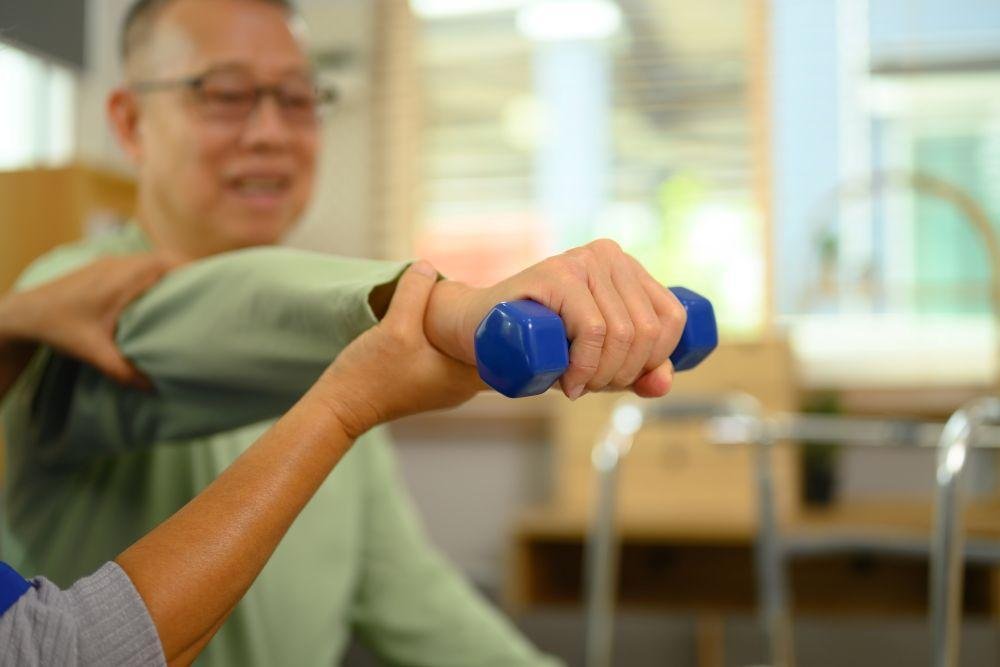
Your surgeon’s given the all-clear. You’ve got the discharge letter filed away. The last formal physiotherapy programme is next up on the calendar. You’re considered ‘recovered’ now – right?
The answer isn’t so black-and-white. If you’re a senior, chances are you don’t feel fully recovered yet even though you’ve got the medical all-clear. You might still feel shaky, uneven or weak when you walk; you might be wondering when your hip can be trusted on uneven ground again; you might wonder how you can rebuild the strength and coordination you’ve lost.
A rehabilitation personal trainer can help fill those gaps, rebuild strength and coordination, and support the transition from rehabilitation into long-term physical independence and active ageing.
For some individuals, this happens after discharge from physiotherapy. For others, rehabilitation personal training works alongside ongoing physiotherapy care, particularly when progressing into higher-level strength, balance, mobility, or return-to-activity goals.
What is a Rehabilitation Personal Trainer?
A rehabilitation personal trainer is not simply a standard personal trainer with extra certifications.
Where a standard personal trainer might focus on performance or body composition, a rehabilitation personal trainer focuses on rebuilding functional strength, restoring confidence in movement, improving balance and coordination, and supporting longer-term physical independence. Objectives and goals are shaped around an individual’s recovery goals, physical limitations, and medical history rather than a generic fitness outcome.
This distinction especially matters for seniors and older adults. Engaging a rehabilitation personal trainer is not about pushing capacity for its own sake. It is about closing the gap between where someone is after injury or surgery and where they need to be to live independently and well.
At The Physio Circle, rehabilitation personal training is delivered as part of a collaborative care model. Our Strength & Conditioning Coach works closely with our Physiotherapists to ensure the programme remains aligned with the individual’s clinical needs, recovery stage, and longer-term goals.
Depending on the individual, rehabilitation personal training may begin after discharge from physiotherapy, continue alongside ongoing physiotherapy treatment, or serve as a progression into higher-level strength and conditioning once pain and basic function have improved.
Why Older Adults Benefit From This Approach
Over time we naturally experience several changes in our bodies: muscle mass declines, bone density changes, joint mobility decreases, and balance becomes less automatic. Recovery from injury or surgery takes longer too.
However, these are not reasons to avoid exercise. Quite the opposite; exercise is key to maintaining strength and coordination as you age. But they do mean that extra care should be paid to how your exercise plan is structured and progressed, compared to that of a younger person with the same diagnosis or recovery plan.
For older adults and families looking for a personal trainer for seniors in Singapore, it’s important to consider rehabilitation-focused programmes that account for these physiological factors from the start. A generic gym programme or unsupervised exercise plan is less likely to do so.
When do I need rehabilitation personal training?
The situations where rehabilitation personal training is appropriate are varied, but may include:
- Recovery from hip or knee replacement (Cleared by your medical team to progress your physical activity)
- Returning to movement after a fall or fracture
- Managing chronic joint discomfort and restoring confidence in movement
- Exercises for strength, physical resilience, balance, and coordination for active ageing
In each case, a trainer-supervised programme allows progress to happen at a pace that reflects the individual’s current capacity. For seniors and older adults who have lost conditioning during a period of injury or recovery, gradual rebuilding is what protects the gains already made and reduces the risk of a setback or re-injury.
What to Expect From Sessions With a Rehabilitation Personal Trainer
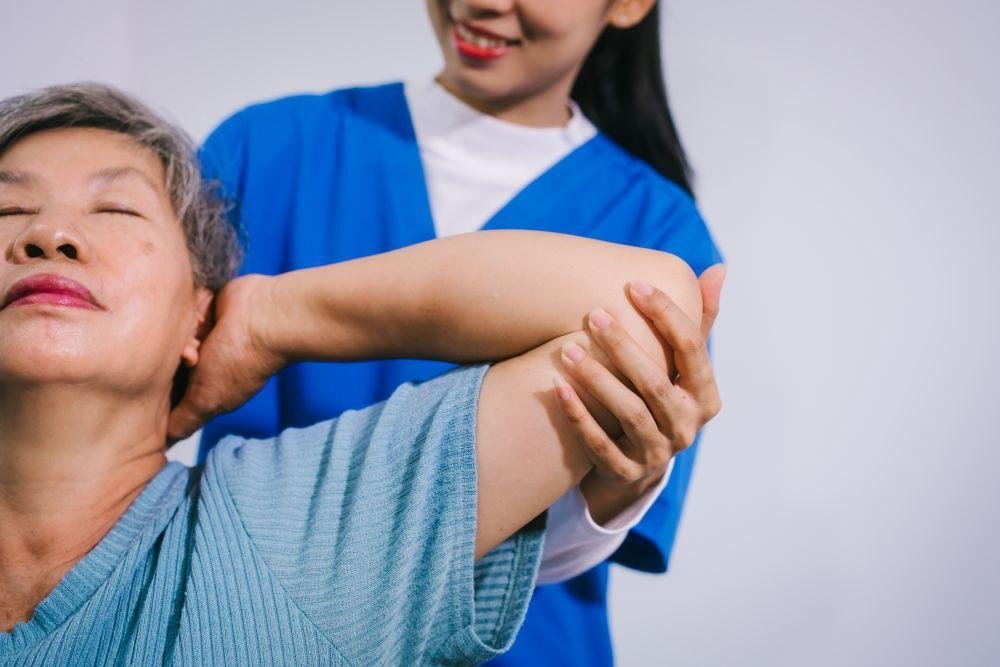
First-session intake
Sessions with a rehabilitation personal trainer typically begin with a thorough intake: a conversation about goals, a review of medical history, and an honest assessment of current physical capacity. If the individual is currently undergoing physiotherapy treatment at a physiotherapy clinic, or has recently completed a physiotherapy programme following surgery or injury, that clinical context informs the rehabilitation plan from the start.
Personalised exercises and rehab programming
From there, programming and rehab strategies are built around the individual. The exercises your personal trainer recommends will look different for someone three months post total knee replacement than for someone in their seventies working to improve function and reduce fall risk.
What they do share is a focus on functional movements: getting up from a chair without needing the armrests, climbing stairs with confidence, carrying groceries without bracing against discomfort, moving across uneven ground without hesitation, etc. Depending on the individual’s needs and mobility, sessions may take place in-clinic or through home physiotherapy.
These movements will determine whether a senior is living with independence or gradually working around the absence of it.
Gradual progression
As strength and confidence build, the programme advances. TPC’s Strength & Conditioning Coach monitors how the individual responds to each phase and adjusts accordingly. Nothing follows a fixed template; everything is gradual, deliberate, and benchmarked against individual progress.
For those who have completed their rehabilitation at The Physio Circle, that clinical oversight continues. The Strength & Conditioning Coach works directly with the treating physiotherapist to ensure the progression plan stays aligned with what the clinical picture supports. If something changes, whether it’s a pain flare-up, concerns raised at a follow-up appointment, or a shift in what the individual can or cannot do, the programme responds accordingly.
For those coming to The Physio Circle seeking personal trainers for rehabilitation without having previously seen a TPC physiotherapist, the appropriate starting point is a physiotherapy assessment. This allows our team to understand any existing impairments. A physiotherapist can assess what is contributing to current limitations, identify what needs to be accounted for in the conditioning programme, and build a collaborative plan with the Strength & Conditioning Coach from the outset. That coordination from the beginning is what makes our programme tailored to the individual rather than generic.
The Physio Circle team works across a wide range of rehabilitation needs, from post-injury knee physio to sports physiotherapy to post-surgical recovery and age-related conditioning. The same collaborative model that supports active adults returning to sport applies to older adults working towards greater physical independence.
Older adults and their families can be assured that progress is monitored by a team with both clinical and conditioning expertise working in concert – ensuring that you or your loved one’s needs are considered and cared for at every step of recovery.
Taking the Next Step Towards Active Ageing
Building strength, improving balance, and moving with greater confidence in later life are realistic goals everyone should want to (and can) achieve. They are not reserved only for people who were already highly active before an injury or procedure.
Research consistently supports the value of structured, progressive exercise for physical function in older adults. What matters is that the programme is designed around the individual, delivered by someone who understands the clinical context, and advanced at a gradual, realistic pace that reflects where the person actually is.
If you are a senior or older adult in Singapore asking what will a personal trainer do for you following surgery or injury, the direct answer is this: the right rehabilitation programme helps close the gap between clinical recovery and the level of function that makes daily life feel manageable again. That might mean getting upstairs without holding the rail, leaving the house without assistance, or simply moving with less hesitation.
If you are considering options for yourself or an elderly family member after surgery, injury, or a period of reduced activity, our team can help determine whether ongoing physiotherapy, rehabilitation personal training, or a combination of both is the most appropriate next step for this stage of recovery.
Get in touch with The Physio Circle to find out more.
*This is general information and is not a substitute for individual assessment. If a specific injury or symptom is involved, consult your physiotherapist for advice tailored to your situation.