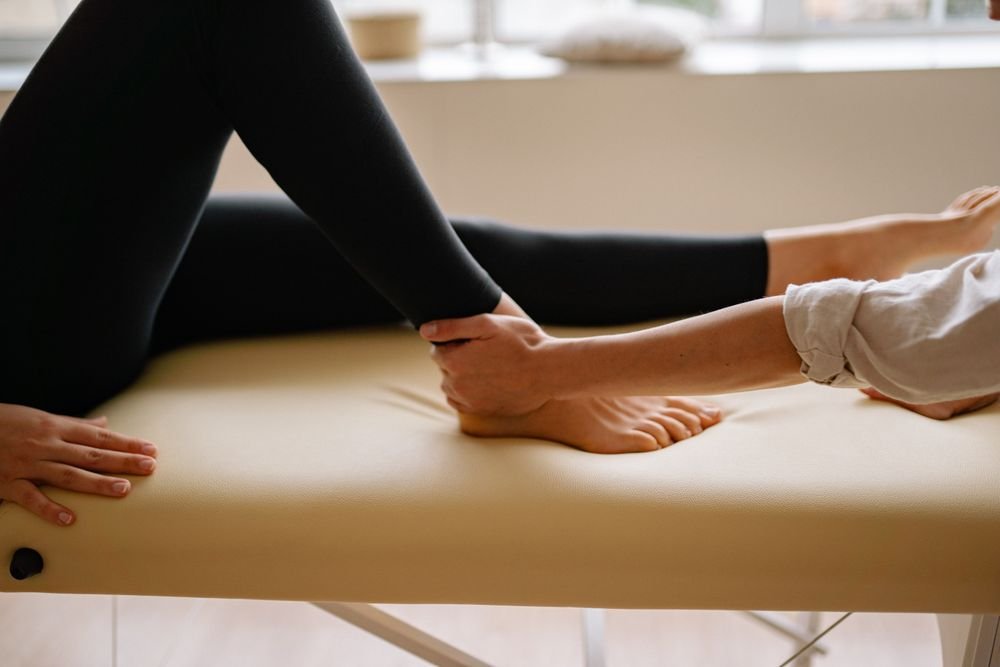
In Singapore, sports massage often gets used as a catch-all for any deep-pressure muscle work delivered to someone who trains in sport. The clinical reality is more specific. It’s a targeted soft-tissue treatment with a defined role in recovery, tightness, and movement quality, and a clear set of limits on what it can address.
The short answer to what is a sports massage (or sport massage, in the singular): a hands-on treatment focused on the muscles and connective tissue most affected by training, repetitive load, or daily physical demand. It’s used by professional athletes such as runners, lifters, climbers, and team-sport players, but also may be recommended for gym-goers, desk-bound professionals, and older adults rebuilding activity. The aim is to reduce muscle tension, support recovery, and help the body move more freely.
How Does a Sports Massage Work?
Sports massage involves the manual manipulation of muscles and soft tissues by a trained therapist. It’s not a generic muscle massage delivered with a fixed routine. The treatment targets specific areas based on what’s tight, what’s overworked, and what’s contributing to the way you currently move.
The techniques used aim to do a few things at once:
- Increase blood flow to the treated area, which helps deliver oxygen and nutrients to the muscle tissue and supports recovery after exercise.
- Release tight muscle fibres that have tensioned under repeated load.
- Reduce pressure in overworked regions where tone has built up faster than the surrounding tissue can absorb.
- Affect the gliding relationship between muscle, fascia, and the surrounding structures, which may then present as improved flexibility and range of motion.
In some cases, focused work on older soft-tissue scarring may affect mobility in tissue that has lost some of its original give. The progress is gradual, not dramatic, and is often recommended to be paired with movement.
What Are the Benefits of Sports Massage?
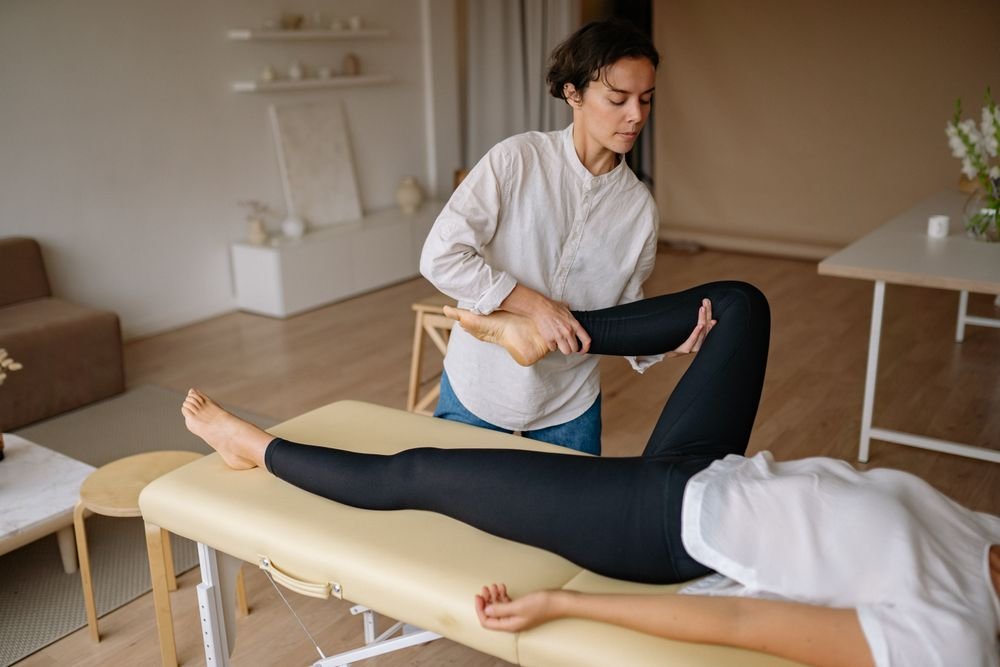
Used appropriately following assessment by a qualified practitioner, sports massage may:
- reduce muscle tightness and stiffness from training or sustained daily activity
- support recovery between hard sessions or after a heavy training block
- improve flexibility and the quality of basic movement patterns
- help manage discomfort linked to repetitive activity or prolonged positions
- contribute to injury prevention when paired with a broader plan that includes strength, mobility, and load management
The benefits, when applicable, may apply only when sports massage is used alongside the rest of the work. Massage can be a useful part of a recovery plan. Pairing hands-on therapy with movement and loading is one approach that practitioners commonly use to support longer-term outcomes.
Is Sports Massage Only for Athletes?
No. The name suggests otherwise, but the applications extend beyond sports injury physiotherapy.
It may be suitable for:
- active adults and gym-goers managing the cumulative load of training
- people returning to activity after an injury, illness, or surgical recovery
- desk-based professionals carrying shoulder, lower-back or neck tension from prolonged sitting
- older adults rebuilding mobility after periods of reduced activity
- anyone whose daily life produces enough physical demand for muscle tightness to interfere with how they move
For non-athletes, the value often lies more in pain management, mobility, and overall wellbeing than in performance.
What to Expect at Your First Session
Generally, the session opens with a short consultation. Your therapist may ask about your activity, current symptoms, training pattern, and what you’d like the treatment to address. This shapes the work that follows.
Sports massage physiotherapy itself is targeted rather than full-body. Pressure can feel deep, and tight areas may feel briefly uncomfortable, though it should remain manageable throughout. Mild soreness in the time that follows is normal and tends to settle on its own.
When Should You Get a Sports Massage?
Timing matters more than frequency. Some possible windows include:
- after exercise, to support recovery from a hard session or training block
- during training periods, to manage tightness that’s starting to affect movement quality
- before an event, with lighter treatment that prepares muscles without taxing them
- as part of regular maintenance, particularly for those training consistently across the year
A pre-event massage and a recovery massage are not interchangeable. The pressure, depth, and intent differ. Your therapist will adjust the work to match the timing.
When Should You See a Physiotherapist Instead?
Sports massage helps with muscle tightness. It does not, on its own, address the root cause of pain that keeps coming back.
Consider visiting a physiotherapy clinic if you have:
- persistent or worsening pain
- swelling or a sense of joint instability
- a recurring injury that settles and returns
- reduced strength, range, or control in a specific area
A physiotherapist can assess the underlying problem, identify what’s driving it, and structure a rehabilitation plan that addresses the cause rather than the symptom. Where appropriate, sports massage may be part of that plan.
If you’re not sure whether sports massage on its own is enough, or whether the issue calls for a fuller physiotherapy assessment, our team can help you work that out. Book a session at our physiotherapy clinic and we’ll talk through your activity, your symptoms, and the next step that makes sense for you.
*Thisis general information and is not a substitute for individual assessment. If a specific injury or symptom is involved, consult your physiotherapist for advice tailored to your situation.