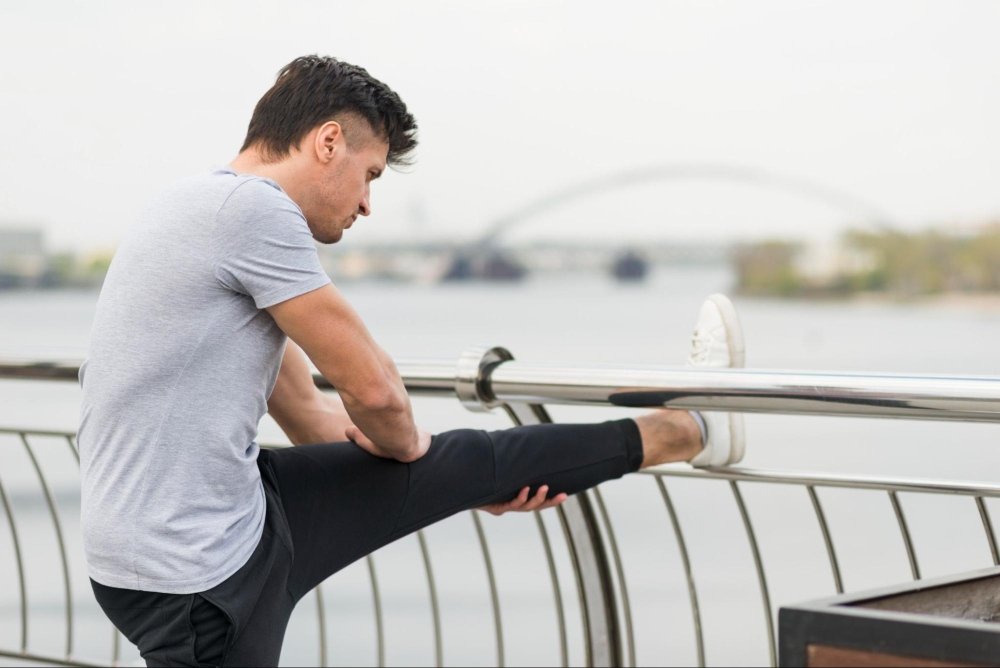
The warm-up is usually the first thing to go when time is short. You’re behind schedule, so you skip straight to the run, the lift, the first serve. And when the session ends, most of us walk off the moment the final whistle goes, mind on the shower and the drive home and nothing else. Both habits feel harmless. Both mean missing an opportunity to prepare your body for exercise. A well-designed warm-up improves performance and, in many sports, forms an important part of injury prevention.
A warm-up and a cool-down are not performance rituals or box-ticking. When done properly, the warm-up is one of the simplest and most accessible forms of sports injury prevention available to any active person, and the cool-down has its own job in how you recover. This piece covers what each one does, how to build them around your sport, and the mistakes that turn a good habit into a wasted one.
Why Do We Warm Up Before Playing Sports?
Most recreational athletes treat the warm-up and cool-down as optional extras, the parts you drop when you are busy. That mindset is where many avoidable injuries begin.
The two phases do different jobs.
- A warm-up does more than loosen muscles and tendons. It prepares the joints and the nervous system for what’s about to be asked of them, raising muscle temperature, increasing blood flow, and switching on the movement patterns your sport demands. Reaction time, coordination, balance, and power all sharpen as the intensity builds. By the time you reach your first sprint or first lift, the tissue has already been primed, not shocked into work it wasn’t ready for.
- Cool downs help the body transition gradually from exercise to rest, provide an opportunity for post-exercise mobility work, and support overall recovery habits. A cool-down allows heart rate and breathing to gradually return to resting levels while providing an opportunity to address post-exercise tightness and maintain flexibility.
What Happens to Your Body Without a Proper Warm-Up
Starting exercise at high intensity without gradually increasing demand means your muscles, tendons and nervous system have had little opportunity to prepare for the movements ahead. A gradual warm-up changes that. It sharpens coordination, smooths out your movement, and helps your muscles produce more power once the harder work starts. Joints benefit from a warm-up too. They rely on movement to circulate the fluid that lubricates them, and a few minutes of easy activity gets that going.
What a warm-up does is improve the odds: it raises tissue temperature, eases the joints into range, and switches on the movement patterns your sport is about to demand.
That readiness is the point, and it is why the warm-up holds its place even when time is short. The strains and niggles that can come with a cold start are exactly the kind of thing it helps guard against.
How to Warm Up for Sports
A warm-up should be specific to the demands of the session ahead. The goal is not simply to raise body temperature but to prepare the muscles, joints, tendons, and nervous system for the movements they are about to perform. A runner benefits from work that prepares the hips, calves, and hamstrings for repetitive forward motion. A tennis player needs preparation that includes shoulder mobility, trunk rotation, and lateral footwork. The closer the warm-up reflects the activity, the more effectively the body moves into it.
That also means moving past the idea that a warm-up is a handful of static stretches. An effective warm-up typically progresses from light aerobic movement, to dynamic mobility exercises, to sport-specific drills performed at gradually increasing intensity. This approach prepares tissues for load while improving movement quality before competition or training.
A warm-up before running, for example, might start with a few minutes of easy jogging, move into leg swings and hip openers, then build through strides that climb towards session or race pace. The principle holds across sports: build intensity gradually rather than going from rest to full effort in one step.
The specifics are tailored to you and your sport, so treat this as general information rather than a strict plan, and check with a sports physiotherapist in Singapore if you have any specific concerns.
How to Cool Down After Sport

Static stretching, the kind held in place, suits post-exercise rather than before, as many people find stretching more comfortable after exercise when tissues are warm.
A cool-down gives your body a gradual transition from exercise back to rest. Walking or light movement for a few minutes can help heart rate and breathing settle, while post-exercise mobility or stretching may be a comfortable way to maintain flexibility if that is one of your goals.
What cool-downs are less effective at is accelerating recovery. Current evidence suggests they do not meaningfully reduce delayed-onset muscle soreness (DOMS), prevent injuries or substantially improve next-day performance. Their value lies more in promoting good recovery habits and providing time for mobility work than in producing specific physiological effects.
The Most Common Warm-Up and Cool-Down Mistakes
- Rushing through or skipping either phase when time is tight, which is exactly when the body is least prepared
- Using long static stretches before activity instead of dynamic movement, which can leave the muscles feeling loose but less ready for explosive effort
- Treating the cool down as injury insurance rather than what it is, a recovery and mobility habit
- Running the same warm-up regardless of sport or intensity, rather than tailoring it to the demands of the session ahead.
- Finishing the warm-up too far below the intensity of the activity ahead, leaving the body insufficiently prepared for the demands of training or competition.
How The Physio Circle Supports Injury Prevention
At The Physio Circle, injury prevention starts with understanding how you actually move. A sports physiotherapist may be able to help identify movement patterns, mobility restrictions, strength deficits and loading factors that may increase injury risk.
From there, personalised warm-up and cool-down protocols are built as part of a broader injury-prevention or return-to-sport programme. For anyone returning from a previous injury, a structured assessment means the return to full training is supported by appropriate preparation and load management. Sports massage therapy can be used as an adjunct to training and recovery for athletes, although it does not replace appropriate strength training, load management and sport-specific preparation.
If you would rather not guess at any of this, we can put the structure together with you. As a physiotherapy clinic working with athletes and active adults in Singapore, our team builds around your sport and your goals, not a template.
This article contains general information only. If you are experiencing pain or a musculoskeletal condition, consult a qualified healthcare professional for advice specific to your situation.