Recovery from injury or physical discomfort does not stop once you leave the physiotherapy clinic. What you do at home plays an equally vital role in regaining strength, improving movement, and restoring confidence in your body.
Many people assume that effective rehabilitation requires specialised equipment or a gym setting, but in reality, you can make remarkable progress with simple, safe exercises in your own living space.
Whether you’re going through sports injury physiotherapy, post-operative rehabilitation, or knee pain physio, these exercises provide the consistency that helps improvements last well beyond the clinic.
Why Building Strength at Home Matters
Rehabilitation is a journey that thrives on consistency. While physiotherapy sessions provide professional guidance and targeted support, the effort you put in at home is what reinforces these gains. Think of home-based exercises as the foundation stones of recovery — they strengthen weak areas, prevent muscles from tightening, and build resilience against reinjury.
Committing to a daily or weekly routine at home ensures that progress is not lost between sessions. Over time, these exercises enhance mobility, support better posture, and reduce discomfort in joints and muscles. Perhaps most importantly, they empower you to take ownership of your health. When you can move with greater strength and confidence, tasks such as climbing stairs, carrying groceries, or even sitting comfortably at your desk become far more manageable.
Simple Strength-Building Exercises to Start Today
Here are some practical strength training and resistance training exercises you can do at home — no gym equipment required. They’re safe, effective, and easy to adapt to your fitness level.
Lower Body Exercises
- Squats: Begin with your feet hip-width apart, bend your knees, and lower your body as if sitting into a chair. Keep your chest upright and avoid letting your knees cave inward. Squats build strength in the thighs, glutes, and hips — the major muscle groups that support walking, balance, and overall lower body stability.
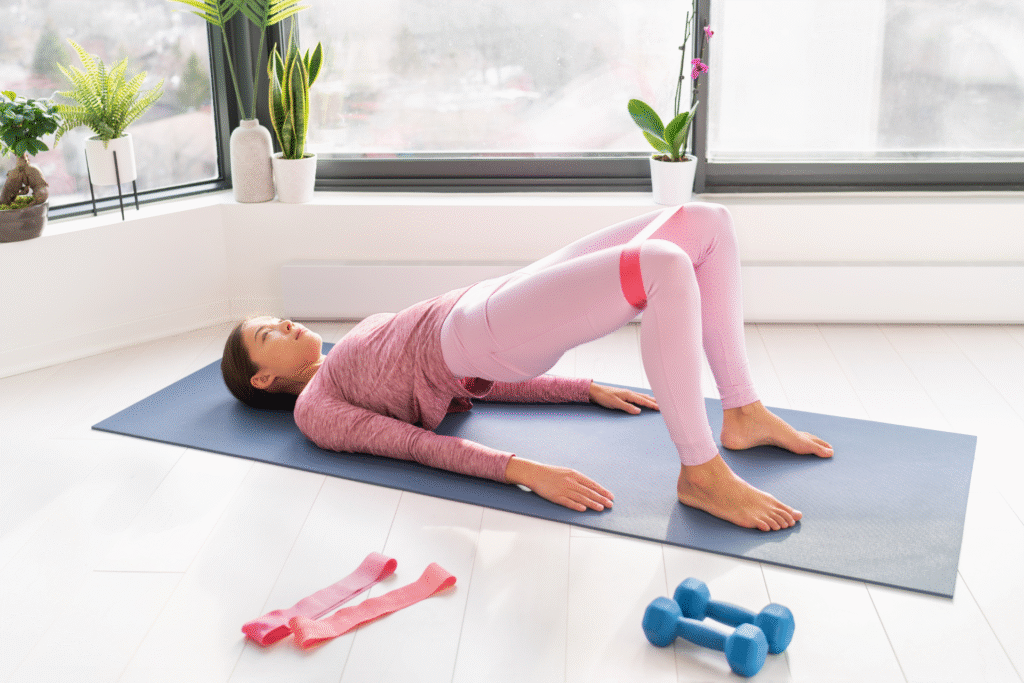
- Bridging: Lie on your back with your knees bent, feet flat on the floor. Slowly lift your hips towards the ceiling while squeezing your glutes. This strengthens your core and glutes, relieves strain on your lower back, and improves pelvic control.
- Seated Knee Extensions: Sit upright in a sturdy chair with your feet flat on the floor. Slowly straighten one knee to lift your foot until your leg is extended, then hold for a few seconds before lowering it back down. Alternate between legs. This exercise strengthens the quadriceps without putting excessive strain on the joints, making it suitable for those with limited mobility or knee discomfort.
Upper Body Exercises
- Wall Push-Ups: Stand facing a wall, place your palms at shoulder height, and slowly bend your elbows to bring your chest closer to the wall before pushing back. This low-impact exercise is ideal for building chest, arm, and shoulder strength without overloading the joints.
- Shoulder Blade Squeezes: Sit or stand tall, draw your shoulder blades back and down as if trying to pinch them together. Hold briefly and release. These subtle movements help correct rounded shoulders, improve posture, and strengthen the muscles of the upper back.
- Arm Raises with Resistance Bands: Stand tall and hold a resistance band with one end in each hand. Step lightly on the middle of the band or anchor it under a chair leg for stability. With straight arms, slowly raise your hands to shoulder height, keeping gentle tension in the band throughout. The stretch of the band provides resistance, strengthening your shoulders while also encouraging flexibility and stability — useful for everyday activities like lifting and reaching.
Core Stability Exercises
- Pelvic Tilts: Lie on your back with knees bent, gently flatten your lower back against the floor by tightening your abdominal muscles. This small but powerful movement activates the deep stabilising muscles that protect your spine.
- Bird-Dog: From an all-fours position, extend one arm forward and the opposite leg back, hold, then return and switch sides. Bird-dogs train balance, coordination, and core strength simultaneously, all essential for stability in everyday movements.
- Seated Marching: Sit upright and lift one knee towards your chest, alternating legs in a slow marching rhythm. This activates the hip flexors and core muscles while remaining gentle, making it ideal for beginners or those easing back into activity.
Tips for Integrating Home Exercises Into Your Daily Routine
Consistency is often the hardest part of rehabilitation. To make exercises a natural part of your day, consider linking them to existing habits — for instance, completing a set of squats while waiting for the kettle to boil, or practising shoulder squeezes during work breaks.
Start with shorter sets and lighter effort, gradually progressing as your body adapts. Tracking your exercises in a journal or app not only helps monitor progress but also provides a motivational boost when you look back at how far you’ve come. Most importantly, prioritise safety: mild muscle effort is expected, but stop immediately if you feel sharp pain. Modify movements when necessary, and do not hesitate to ask your physiotherapist for guidance on adapting exercises to suit your needs.
Mindset for Success: Empowering Your Recovery Journey
Rehabilitation is as much about mindset as it is about movement. Many people underestimate the power of celebrating small wins, but recognising milestones, such as completing more repetitions or experiencing less stiffness, reinforces a positive outlook. Progress may sometimes feel slow, but patience and self-compassion are key.
Recovery is rarely linear; there will be good days and days where you feel more limited. Maintaining perspective and reminding yourself that every effort contributes to your long-term goals can help you stay consistent. Regular communication with your physiotherapist ensures your plan evolves with your progress, giving you reassurance and professional feedback.
How The Physio Circle Supports Your Strength-Building Goals
At The Physio Circle, we go beyond what happens inside the clinic. Alongside your in-person sessions, our experienced physiotherapists in Singapore design tailored home exercise programmes that fit your needs, abilities, and lifestyle. These plans ensure that progress continues between appointments, helping you strengthen, recover, and move with confidence in your own space.
We offer in-person and virtual consultations to guide your technique and make sure you are exercising safely. For those keen to build further, our strength and conditioning coaching enhances your routine, supporting both rehabilitation and performance goals. Our patient-first approach ensures you feel supported and confident, every step of the way.
Start Building Your Strength Today
Strength-building at home is not about doing more, but about doing what matters most for your body. By committing to simple, safe exercises, you can accelerate recovery, regain independence, and feel stronger in daily life. Consistency and support are the cornerstones of long-term progress — and you don’t have to do it alone.
Book a session with The Physio Circle today to receive a personalised plan, professional guidance, and the encouragement you need to take charge of your recovery journey.