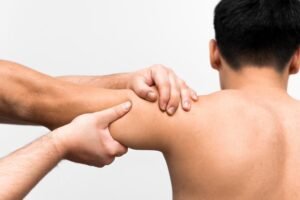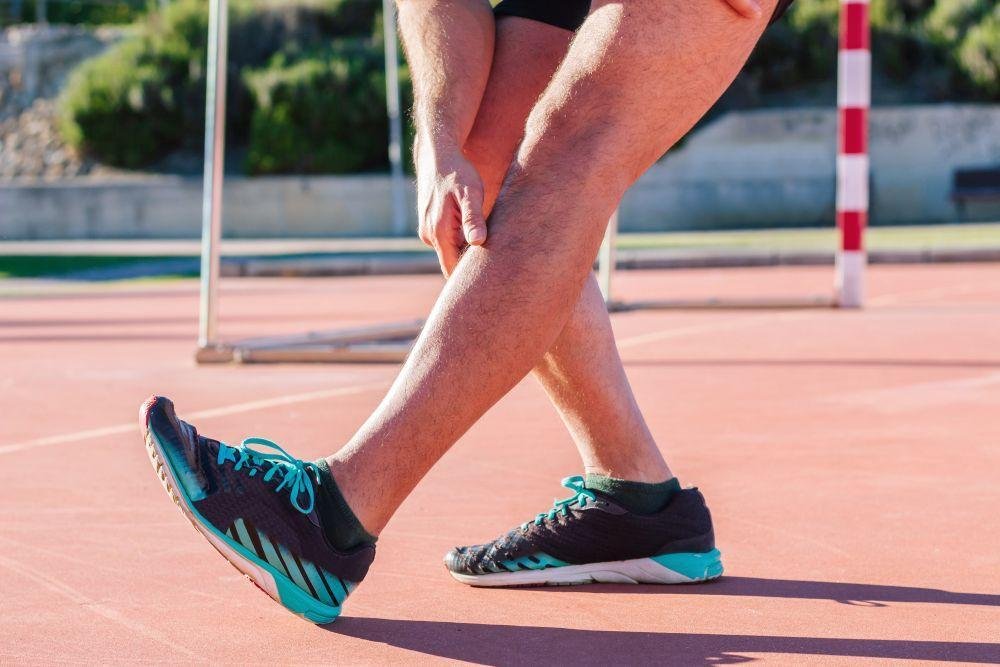
The ache at the back of the heel on the first few steps out of bed. The pull at the outer hip that arrives around kilometre eight and doesn’t fully clear between sessions.
If you’re an athlete, avid runner, or someone who loves staying active, you might be familiar with these pains that are recognisable enough to train through, yet persistent enough to track. Did you know these could be warning signs of tendinopathy?
Most active people live with something like this for weeks before the pain really starts to ramp up and affect which exercise days get modified or even skipped altogether. By that point, the tendon has usually been managing a load problem for longer than the pain suggests.
However, tendinopathy does not respond to the two things most athletes try first to get over this pain. Training through it adds load to a structure that may already be struggling to adapt to current training demands. Yet, complete rest removes the stimulus the tendon needs to rebuild. Both approaches miss the underlying problem and tend to extend recovery rather than shorten it.
Understanding what is actually happening in the tendon is the starting point for managing tendinopathy well so you can regain full strength and coordination.
What Is Tendinopathy?
Tendinopathy is a broad term describing pain, reduced function, and structural changes in a tendon, the connective tissue that attaches muscle to bone. It differs from sports injuries like an acute tear or rupture, which carries a clear moment of onset. Tendinopathy develops gradually and is the result of a cumulative load the tendon has not been able to adapt to over time.
The tendons most commonly affected are:
- Achilles tendon (Heel)
- Patellar tendon (Knee)
- Rotator cuff tendons (Shoulder)
- Elbow tendons
- Gluteal tendons (Outer hip)
Presentation varies too. Some people notice a sharp, localised ache at the start of activity that eases once warmed up. Others experience a duller discomfort that lingers well after training ends. If your pain tends to ‘disappear’ after a warmup you might underestimate how irritated or reactive the tendon has become, attributing it to pre-warmup stiffness.
A professional assessment is the appropriate starting point for understanding what is contributing to tendon pain in a specific individual.
Why Tendinopathy Is So Common in Sports
Tendons are built to absorb and transfer force, and they can adapt to demand over time. The problem arises when training load increases faster than the tendon can keep pace with.
This pattern is consistent across sports though the specific type of tendinopathy typically correlates with your preferred exercise or activity of choice:
- Achilles tendinopathy is common in running and football, where repetitive ground contact loads the same tissue repeatedly across training sessions.
- Patellar tendinopathy follows similar patterns in jumping sports
- Rotator cuff and elbow tendinopathy appear regularly in racquet sports and swimming, where overhead loads repeat at high volume
- Gluteal tendinopathy is a frequent finding in runners and triathletes, particularly during periods of increased mileage or when training resumes after a break. Active adults who combine high training volumes with extended periods of sitting may also be prone to gluteal tendinopathy.
Inadequate recovery between sessions compounds the problem. While muscle soreness from a hard session typically settles within 48 to 72 hours, tendons adapt slower than muscles do. During competition-heavy periods or rapid training build-ups, load may increase faster than the tendon can adapt, contributing to tendon irritation and reduced load tolerance over time.
Why Tendinopathy Cannot Simply Be Trained Through or Rested Away
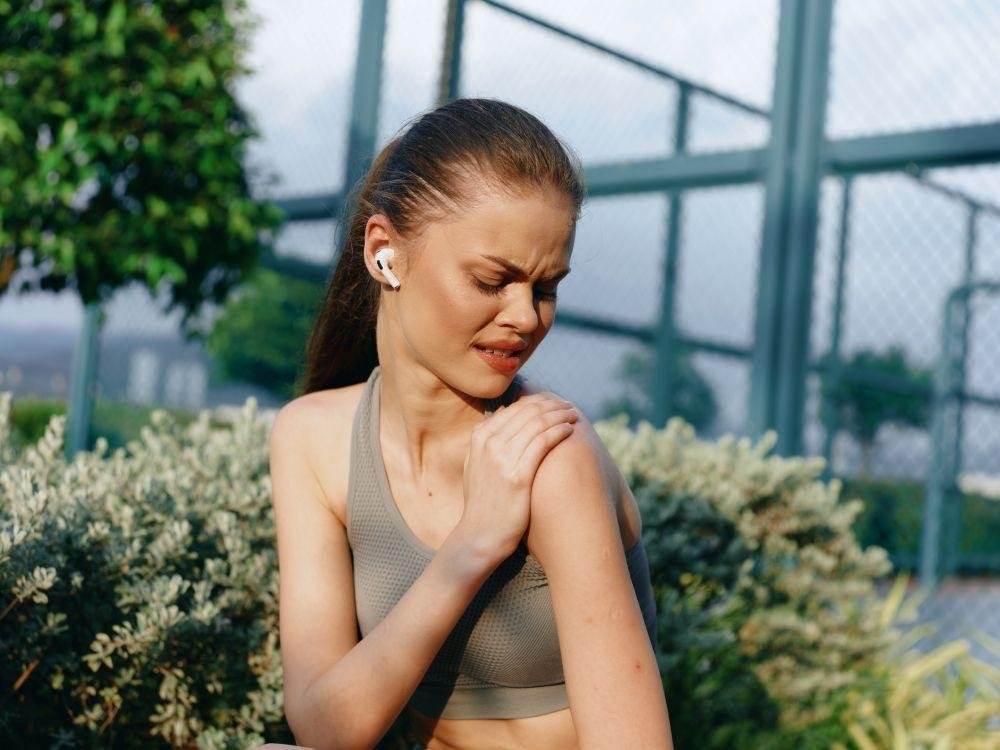
The pressure to stay in training is real. So is the instinct to rest and wait. Neither approach, applied without professional guidance, addresses what is actually happening in the tendon.
One of the most common mistakes active individuals make is resting completely until the pain settles, only to flare symptoms again when they return straight to full training. Tendons typically respond better to gradual, appropriately progressed loading than abrupt swings between overload and complete rest.
Training through persistent tendon pain does not give the tendon the structured stimulus it needs to rebuild capacity. When training loads continue without appropriate modification, the tendon may struggle to recover and adapt effectively, and what began as a manageable niggle or occasional twinge of pain tends to become a more significant problem. Decisions made under competition pressure can add months to what might otherwise be a straightforward recovery, requiring sports injury rehab.
Complete rest presents the opposite problem. Tendons respond to load. Without it, they do not rebuild. A tendon that has been fully offloaded for several weeks may produce less pain on return to activity, but its capacity to handle training demands has not improved. The pain returns because the underlying issue of exceeding the existing tendon load remains.
Whether it’s gluteal, Achilles, or patellar tendinopathy, the fundamental principle of how to treat it is: the right amount of load, progressed at the right rate, under guidance.
The Role of Physiotherapy and Sports Rehabilitation in Tendinopathy Recovery
Initial assessment
A thorough assessment prior to starting any rehabilitation programme matters because tendinopathy presents differently depending on the tendon involved, the sport, and how long the condition has been present. The assessment should cover the history of symptoms, training load patterns, movement mechanics, and the tendon’s current loading capacity.
Progressive loading
Progressive loading is a central component of evidence-informed tendinopathy rehabilitation. The principle involves a gradual, structured reintroduction of load guided by a physiotherapist, calibrated to what the tendon can currently absorb. For gluteal tendinopathy in particular, exercises typically address both tendon capacity and the strength of surrounding musculature, with careful progression away from provocative loading positions in the early stages.
Mild, manageable discomfort during rehabilitation exercises is not always harmful, and physiotherapists often use symptom response over the following 24 hours to guide progression safely.
Athlete-specific tendinopathy rehab
For athletes, rehabilitation goes beyond symptom management. The programme accounts for sport-specific movement demands, conditioning of the muscle groups supporting the affected tendon, and training load management as part of a structured return-to-activity plan. Adjunctive hands-on treatment such as sports massage physiotherapy may also be used where appropriate to help manage symptoms and support participation in the rehabilitation process.
At The Physio Circle, sports physiotherapy treatment in Singapore for tendinopathy follows this progressive model, grounded in the individual’s background, lifestyle, and intended treatment outcomes. Rehabilitation is progressed according to how the tendon responds to increasing load over time. The individual’s sport, their current capacity, and a realistic return-to-activity plan are all considered.
What a Return-to-Sport Timeline Looks Like for Tendinopathy Recovery
Tendinopathy recovery is non-linear. There is no universal timeline and progress depends on the individual’s condition, duration of symptoms, and how consistently the rehabilitation programme is followed.
Return to sport or activity is staged accordingly, though the duration of each phase differs between individuals:
- Early rehabilitation: Focuses on managing load and gradually rebuilding tendon capacity.
- Middle phases: Introduce sport-specific loading and movement patterns at volumes the tendon can tolerate.
- Later phases: Progress to full training load and competition demands.
What matters throughout is how the tendon responds to each progression. At TPC’s physiotherapy clinic, our care team monitors this at each stage and adjusts the programme accordingly. Progress is not measured by time elapsed, but by what the tendon can do and how it responds to each increment of load.
Getting the Right Support for Tendinopathy and Tendon Pain
Persistent tendon pain that is affecting your training or daily activity warrants a professional assessment. With an accurate understanding of what is contributing to the problem and a structured, evidence-informed rehabilitation approach, most active individuals are able to work towards returning to the activities they value.
For anyone in Singapore experiencing Achilles tendinopathy, gluteal tendinopathy, or tendon pain at the knee, shoulder, or elbow, an early assessment gives a clearer picture than continued trial and error. The longer a tendon has been managed through avoidance or gritted-out training, the more work the rehabilitation process typically involves.
Our team can assess what is contributing to the pain, develop a programme appropriate to your sport and current capacity, and guide you through the return-to-activity process. Get in touch with The Physio Circle to book an assessment at our sports physiotherapy clinic in Singapore.
*This is general information and is not a substitute for individual assessment. If a specific injury or symptom is involved, consult your physiotherapist for advice tailored to your situation.